
According to Wikipedia: “Textile arts are arts and crafts that use plant, animal, or synthetic fibres to construct practical or decorative objects. Textiles have been a fundamental part of human life since the beginning of civilization.”
It’s one of the oldest forms of art in history, in the past it was a way for women, mainly, to weave their storytelling into the fabrics their community wore, blankets, clothing and rugs.
Professor Philip Napier – NCAD, Head of School of Fine Art on National College of Art and Design, Dublin‘s Textile Art & Artefact course:
Textile Art “…explores the formal qualities of line, shape, colour, texture, pattern, as an expressive language through a range of textile processes,” according to The Crawford College of Art and Design’s TEXTILES: CREATING 2D AND 3D TEXTILE ART course.
Textile art has played a part in practical and decorative man-made objects for hundreds of thousands of years through quilting, thread painting, lace-working, beading, and weaving. Textile art is a form of creative expression that involves working with fibres and fabrics to create various artworks. These fibres can be natural or synthetic, and fabrics can be woven, knitted, crocheted, or felted. Examples of textile art include tapestries, quilts, rugs, clothing, and sculpture.
Contemporary Textile Art is more about the concept and has moved the lines to be even more blurred with the creation of sculpture made of fibres, mixed media, and the inclusion of plaster, concrete, copper, wire and more into the mix of textile art.
History
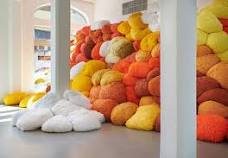
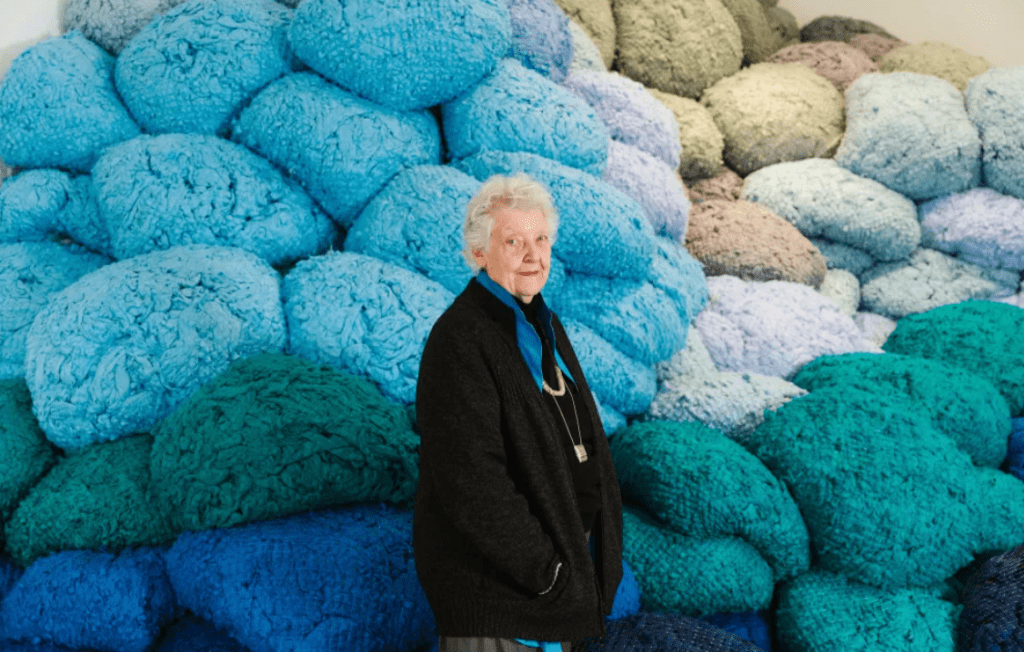
There have been many notable textile artists throughout history. For instance, Sheila Hicks is a celebrated American artist whose large-scale installations and sculptures made from natural and synthetic fibres are renowned for their vibrant, eye-catching colours. Anni Albers, a German-American artist and designer, was one of the leading figures of the Bauhaus movement, exploring the relationship between textiles and architecture in her work.
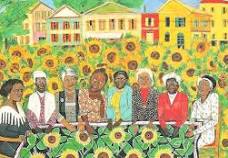
Another artist worth mentioning is Faith Ringgold, an American artist and activist who gained fame for her narrative quilts that depict stories of African-American history and culture. Magdalena Abakanowicz, a Polish sculptor and fibre artist, created large-scale, abstract sculptures using woven burlap and other materials.
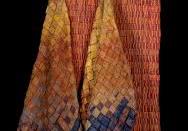
Olga de Amaral, a Colombian artist, is known for her intricate, hand-woven tapestries that incorporate gold leaf and other metallic materials. Meanwhile, Yinka Shonibare, a British-Nigerian artist, explores issues of identity, race, and colonialism in his elaborate, sculptural installations that often feature brightly coloured textiles inspired by traditional African fabrics.
These are just a few examples of the many talented artists who have made a significant contribution to the world of textile art.
 Cork Textiles Network