
This blog post will be edited with contributions from the CTN members.
Tin foil, plaster, and copper are not typically considered materials used in textile art. While all of these materials can be used in various art forms, textile art refers specifically to artwork made from fibres, yarns, fabrics, and other materials that can be woven, sewn, knitted, or felted. Textile art can take many forms, from tapestries and quilts to clothing and sculptures. However, it’s worth noting that contemporary textile artists often experiment with a wide range of materials and techniques, so there are no hard and fast rules when it comes to what can and can’t be considered textile art.
If the art is conceptual then the use of unusual materials woven into the art or used as if a fibre can be unusual and interesting. I wonder if we can all agree that art is subjective and once the process is exploratory, open and results in engaging art then we can keep that open mind and enjoy all the materiality of art.
According to ArteMorbida, “Textile Art is no longer considered a minor art, it is rather a major art which has increasingly been viewed around the world,”
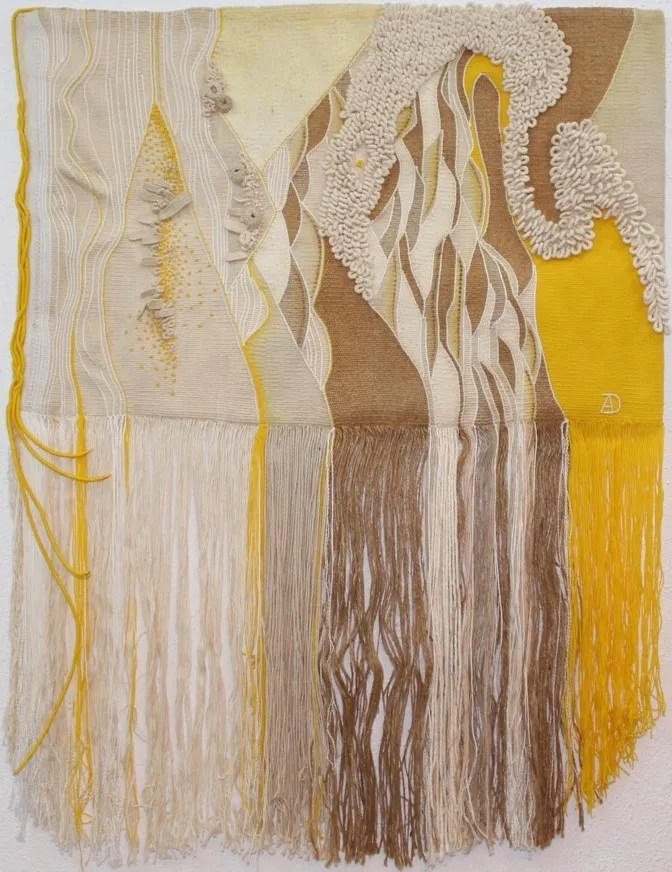
In an interview with Alves Dias, Portuguese painter and textile artist originally from Vila de Rei, was a student of the António Arroio School of Decorative Arts (1972), one of the most significant national educational institutions, with a modern Bauhausian matrix, where painting and textile art have had prominent personalities such as Conceição Salgado, Estrela Faria, Salinas Calado, Teresa Raposo, Rafaela Zuquete, Gisella Santi. The artist has recently had the honor and merit of representing his country at the eighth edition of the International WTA Contemporary Art Biennial of Textiles, in Madrid, he goes on to say,
Now a days there are no limits to the creation of the Textile Art. Everything is suitable to weave, everything is webs and plots without really being it.
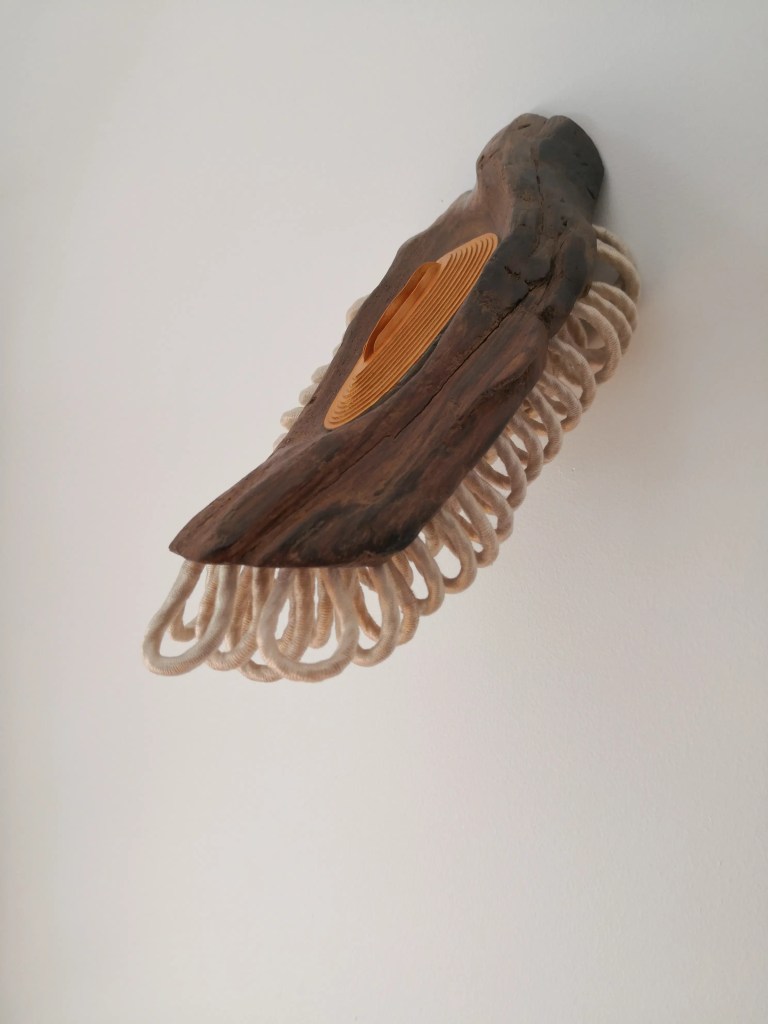
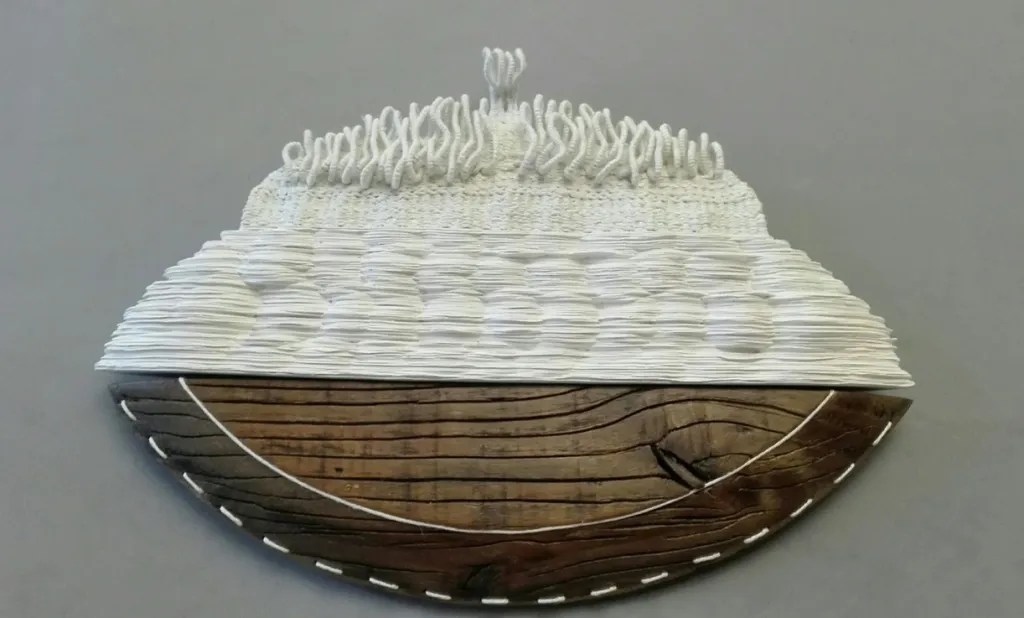
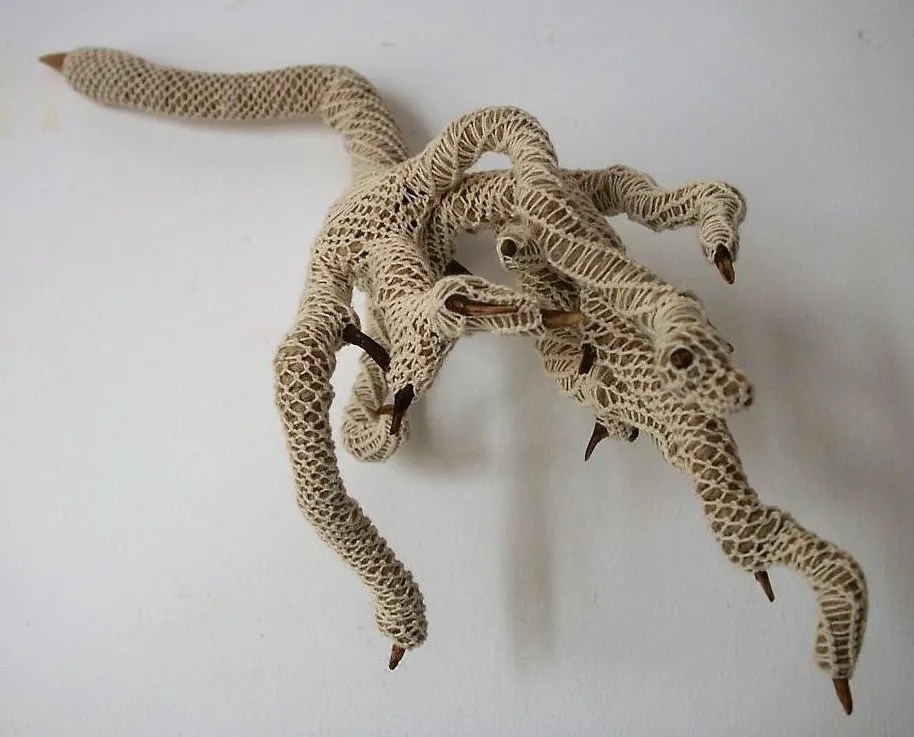
The textile sensitivity trespasses the most diverse materials and techniques and it can disregard the conventional and structural concepts of weaving. To this extent, every things suitable to weave, to interweave, to bind, to cover and to roll up, and it is this that establishes a dialogue between shapes and textures. The work is born this way…
In this path of webs and plots we are finding spaces of dialogue to discover the capacity of the textiles as an artistic means of expression and so were creating new plastic languages in contemporary concepts.
And just look at his work: images all copyright of Alves Dias and taken here.
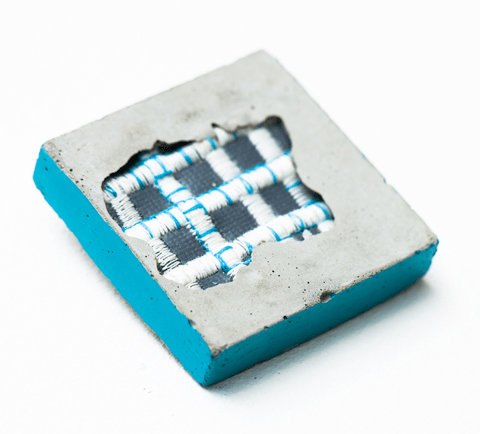
Multi-disciplinary artist, Bethany Walker, BA Honours in Design Crafts at De Montfort University in Leicester, her works includes Cement & Textiles. She explores the built environment through knitted and embroidered threads and cement.
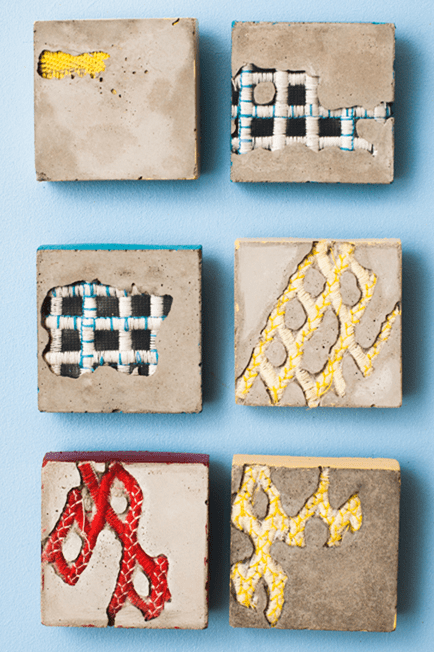
“Life is filled with abstractions, and the only way to make heads or tails of it is going through intuition.” – David Lynch
This intense dialogue between artist and material leads one to a conclusion: by combining these opposing materials, by playing with soft and hard, the building blocks of the world and the protective material we dress in, a hint of a new reality is suggested. A new reality through juxtaposition of two opposing materials….and isn’t that what art is all about?
 Cork Textiles Network